
Family reading
Reading aloud when siblings want different things
Compare a shared book, turns across sessions and separate continuations, then make each child’s choice and the next reading clear.
Published
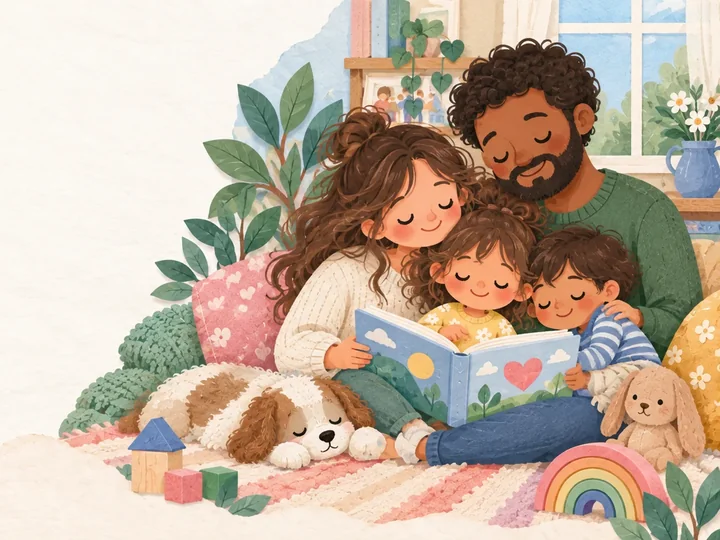
One child wants to return to a favourite picture book. Another wants the next chapter of a longer story. Before trying to find a book that satisfies both requests, decide how this reading will be shared. A short book together, turns across sessions, and a shared beginning followed by separate reading each leave room for different choices.
You can choose the arrangement that fits the adults available and the books the children want now. Both children can be part of the reading without doing the same thing on every page.
Choose the arrangement you can carry through
A short book together can suit a session when everyone wants to begin at once and you have one adult reading. Offer a small choice of books you're willing to read now, then open the selected one where both children can see it. Look for something you can share in this sitting, while leaving room to stop if the session needs to end sooner.
This arrangement gives the group a common book, but it may leave one child's longer story waiting. Say what will happen to that request before you start. If the longer reading has to wait for another session, put its bookmark in place and name when you'll return to it.
Taking turns choosing across sessions can suit children who want quite different books. In his BookTrust advice, Michael Rosen suggests taking turns choosing a story, or part of one, when siblings have different interests. You can make the turn clear before opening the book: one child's choice is being read now, and the other child will choose at the next shared reading.
Keep the next choice visible by leaving that book ready too. Each child gets to bring a preference into the plan, though they may have to wait for their turn. If a session gets interrupted, decide whether the next one will finish the current choice or begin the other child's book, and tell them. Otherwise the adults and children may have different ideas about whose turn comes next.
A shared beginning followed by separate reading can suit a situation where both children want some time together but only one wants to continue with the longer book. Start with an agreed shared portion, then move to the separate reading if the adults can manage it. With two available caregivers, each could read with one child. With one caregiver, the continuation may need to wait until the other child is settled in another activity or another adult is available.
Choose that split only when you can explain what comes next. If both children need your attention at the same time, pause the longer book and make a later plan. The arrangement has to fit the care you're providing as well as the story.
Give book choice and page turning their own turns
Choosing the book can become confusing if it also seems to mean controlling every part of the reading. Say which choice belongs to this session, then agree on how you'll handle the pages.
One child might choose the story while the adult holds the book and turns the pages. Another arrangement could let the children alternate page turns, if both want that job. If one child wants to turn ahead while the other is still looking, the adult can hold the page until the shared reading is ready to move on. These are possible arrangements to agree on, rather than jobs assigned to an older or younger child.
Picture pointing is a separate invitation too. Let either child show you something they noticed. When you return to the words, make it clear where you're beginning so a comment about a picture doesn't leave the other listener unsure which part you're reading.
You remain responsible for holding the arrangement together. An older child can enjoy the story without taking on the job of teaching, entertaining or managing a sibling.
Leave room for different ways of following
You can offer more than one way into a shared page. One child may want to hear what the character does next while another wants to look closely at the picture. If a detail recurs in the actual book, you could invite either child to look for it as you read. If the book has a repeated line, both can join in when they want to.
Keep those invitations optional. A listener can follow quietly, and a picture doesn't need a question attached to it every time. Choose a pause for something the children notice, then continue when you're ready. You don't need matching answers or matching reactions to share the book.
When you're choosing a common book, our preschool group-storytime guide compares different kinds of participation and the view of the pictures. Use those comparisons to find a starting point, while keeping the household arrangement separate from the book's features.
Make a separate continuation concrete
Suppose, in a hypothetical session, the family agrees to share a picture book and then continue the longer story with the child who requested it. The picture book is finished, but the other child needs the adult's help before the continuation can begin. In this example, a second caregiver will be home after lunch.
The adult can pause there and say that the longer story will continue after lunch, while the second caregiver spends time with the sibling. Keep the longer book at its bookmark. If the second caregiver will do the reading, tell them which book is waiting and where to start. The requested story still has a place in the plan, and both adults know how they'll make time for it.
If only one child wants to carry on partway through a shared book, you can also mark that page and separate the next session. Say whether you'll continue it with that child or return to it together. A split is easier to follow when the people involved know who the next reading is for.
For longer-book choices, our first chapter books for shared reading guide explains the different kinds of continuation. You can use it to choose a book with stopping points that fit your arrangement.
Before the next reading, tell the children whose book you'll begin with, what the shared portion is, and what will happen if one wants to continue. Keep the next book ready, and make the promised turn one you can carry through.