Kindle Apps for Preschoolers
You can start reading simply by using the Kindle app on a phone or tablet, or by using a supported Amazon device with parental controls and access to the Kids+ library. Before you commit, check which screen you actually have. Monochrome Kindles will show illustrations in greyscale, while the Kindle Colorsoft and Colorsoft Kids models show them in color. Fire tablets are full-color devices that also run apps. I always recommend checking a book preview on your specific device to see if the layout actually feels comfortable on that screen.
The distinction that decides everything
It is easy to get confused between a dedicated Kindle e-reader, the Kindle reading app, and Amazon Fire tablets. Dedicated Kindles come in monochrome or color Colorsoft models, while the Kindle app works on various compatible phones and tablets. Fire tablets are full-color devices that run apps, and the Kids editions often come bundled with a protective case and an introductory subscription. Just keep in mind that a Colorsoft is a dedicated reader, not a general-purpose app tablet.
If a picture book relies on color to tell its story, the screen you choose matters. Both Kindle Colorsoft readers and full-color tablets can display those colors, but they use different types of screens. Since illustrated editions often have specific layouts, it is better to preview a book on your own device rather than assuming it will look right. Traditional monochrome Kindles will display those same pictures in greyscale.
A monochrome Kindle can actually be quite useful as your child grows into text-heavy chapter books. For preschooler picture books, the main thing is whether you and your child can comfortably see the illustrations and read together. Color e-ink readers are also an option; e-ink doesn't always have to be black-and-white.
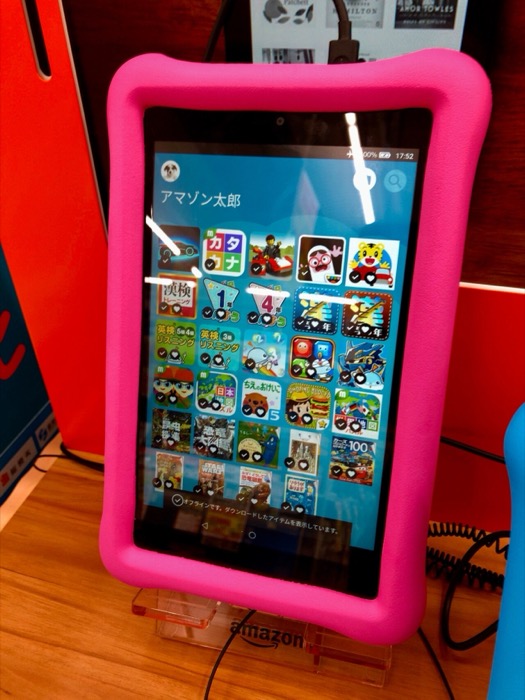 Color tablet — illustration survives
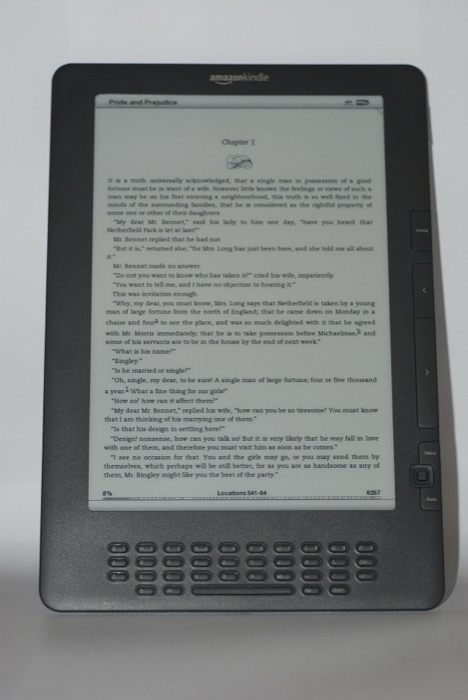 The pictured Kindle DX has a monochrome screen.
Look at Fire Kids tablets on AmazonAffiliate link
Kindle apps for preschoolers: what to actually install
A simple reading setup starts with the Kindle app, which opens any Kindle books you've purchased or borrowed. If you want a curated library and parental controls, Amazon Kids+ is an option, but keep in mind that the available content depends on your specific device. Many Fire Kids tablets come with an introductory Kids+ subscription, so be sure to check how long that lasts and what the renewal terms are before you commit. It's also important to remember that Kids+ isn't a general-purpose reading app that works interchangeably on every phone or tablet.
Before you add another app to your device, look closely at what your child is actually doing in it. A game that happens to include letters isn't automatically a reading lesson. Make sure you're leaving room for reading aloud together and talking about the stories. For a broader look at how literacy develops, our guide to when children learn to read and what actually predicts it explains the bigger picture.
Check what Amazon Kids+ includesAffiliate link
Free Kindle books for preschoolers, and the catch
It helps to keep three different offers separate: free-to-keep Kindle titles (which can include publisher promotions or public-domain classics), Prime Reading (a rotating selection available with a paid Prime membership), and Kindle Unlimited (a separate paid subscription to its own specific catalog). Just because a book is included with a subscription doesn't mean it is free without one.
Availability changes constantly, so you can't guarantee a familiar picture book will show up in a free or subscription catalog. Always search for the exact title and check the specific offer before you promise a book to your child. Our board book list can help you find titles to look for, but that doesn't mean those specific editions are available for free on Kindle.
Is Kindle Unlimited worth it for a preschooler?
A Kindle Unlimited subscription might make sense if it includes the books your child actually wants to read and you use it enough to justify the cost. It’s worth browsing the catalog first; reading a lot of books doesn't help if your child's favorites aren't in there. If your child just wants to read the same few books over and over, you might find it better to just own those specific favorites. There isn't an automatic saving just because you've subscribed.
Our 1–5 re-read tolerance score is an editorial judgment of how well a book holds up through repeated readings. It's meant to be a clue when you're searching for lasting favorites, not a way to calculate finances. If a book gets a 5/5 but your child wants to read it every single night, it might be better to just own a print copy.
See what Kindle Unlimited costsAffiliate link
The importance of reading together
A tablet is great for certain things: it lets you pack a hundred books into a bag that weighs next to nothing, it's easy to read in the dark, and it gives an older child their own library to explore. There's no argument there.
Regardless of whether you're using a physical book or a screen, the magic happens in the interaction: pointing at pictures, asking questions, and letting the story wander. Paper books tend to make it easier to stay focused on the narrative, whereas a tablet can sometimes present distractions like menus or other apps. If you're using a screen, keep the setup simple and stay engaged to help your child stay on track. A screen can definitely support shared reading if you make the space for it.
The real distinction is between actively sharing a story and just handing over a device. A tablet is a great, space-saving "second library" for when we're on the go, but our favorite paper books still hold a special place in our bedtime routine. Whichever format you use, aim to keep those ten minutes of reading together.

Common questions
- Can you read picture books on a Kindle?
- Yes, but it depends on the specific model and how the book is laid out. A monochrome Kindle shows illustrations in greyscale, whereas the Kindle Colorsoft and Colorsoft Kids show them in color. You can also use the Kindle app on a color-capable phone, tablet, or Fire tablet. I suggest previewing the illustrated edition on the device you plan to use, especially since dedicated Kindle readers won't run general tablet apps.
- What Kindle apps should a preschooler have?
- Start with one simple setup: use the Kindle app for compatible Kindle books, or use a supported Amazon device with Kids+ if you want a curated library and parental controls. Just remember that Kids+ content varies by device. A preschooler doesn't need a massive collection of different reading apps; it's better to choose something you can actually use and talk about together.
- How do I find free Kindle books for preschoolers?
- There are three main ways. You can find free-to-keep classics and publisher promotions in Amazon's free Kindle listings. If you are already a Prime member, you have access to a rotating selection through Prime Reading. There is also Kindle Unlimited, which requires a separate monthly subscription but offers a much larger catalog. Keep in mind that "free" and "free with a subscription" are different, even if they look similar while you're browsing.
- Is Kindle Unlimited worth it for kids?
- It can be worth it, provided the subscription includes the specific books your child wants and you use it enough to justify the monthly cost. I'd recommend browsing the catalog before you sign up. If your evenings consist of rereading the same few favorites, buying or borrowing those specific books might be the more sensible route.
- Is a tablet as good as a paper book at this age?
- Both formats can work for shared reading. Paper is wonderful for staying focused on the story, while a tablet is incredibly convenient for travel since you can carry so many books at once. If you are using a screen, the key is to make room for conversation, pointing, and questions rather than letting the device's controls or other apps become the main attraction.