
Dinosaur Books for Toddlers
First decide whether you want a dinosaur character or information about dinosaurs. Most of this shelf uses dinosaurs in fiction, humor and interactive patterns. The guide separates those purposes so a familiar dinosaur cover does not stand in for the kind of book you actually want.



Our top picks
 Dinosaur Roar!Ages 0–3 · 3 min · about 70 wordsFull book page
- Estimated read-aloud time
- about 3 minutes
- Words
- 70approximate
- Sentences per spread
- 1
- Re-read tolerance
- 4/5good repeat appeal
- Vocabulary
- 1/5plain words
- Ages
- 0–3
Book features rhymes · repeated refrain · join-in questions
Why it worksRhyming dinosaur contrasts connect visible differences in size, shape and temperament with short descriptive language.
Worth knowingOpposites are the main task; the dinosaurs' movement toward lunch is only a light through-line. How Do Dinosaurs Say Good Night? adds a developed family situation and behavioral question.
Full book page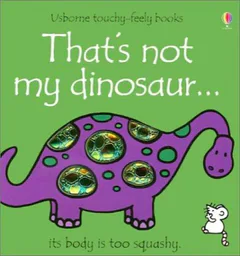 That's Not My Dinosaur...Ages 0–3 · 3.5 min · about 90 wordsFull book page
- Estimated read-aloud time
- about 3.5 minutes
- Words
- 90approximate
- Sentences per spread
- 1
- Re-read tolerance
- 4/5good repeat appeal
- Vocabulary
- 2/5everyday words
- Ages
- 0–3
Book features repeated refrain · join-in questions
Why it worksFive dinosaurs are rejected through a repeated ownership sentence because a different tactile feature feels wrong; the final match completes both the texture sequence and the grammatical pattern. A small mouse provides a parallel visual search.
Worth knowingThis uses the same sentence repeatedly over eight pages. While toddlers might love the repetition, adults often find themselves losing interest much faster than their kids do.
Full book page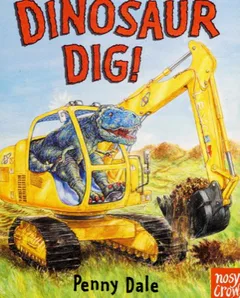 Dinosaur Dig!Ages 2–4 · 3.5 min · 162 wordsFull book page
- Estimated read-aloud time
- about 3.5 minutes
- Words
- 162
- Sentences per spread
- 1
- Re-read tolerance
- 4/5good repeat appeal
- Vocabulary
- 2/5everyday words
- Ages
- 2–4
Book features repeated refrain · join-in questions
Why it worksA growing dinosaur crew operates construction machinery, turning counting into a sequence of jobs that lead to one shared result.
Worth knowingThe dinosaurs are playful workers rather than a source of prehistoric facts. Dinosaur Zoom! uses the same combination of animals and vehicles for a journey instead of a building project.
Full book page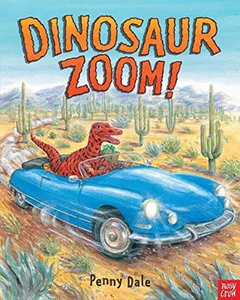 Dinosaur Zoom!Ages 2–4 · 3.5 min · 160 wordsFull book page
- Estimated read-aloud time
- about 3.5 minutes
- Words
- 160
- Sentences per spread
- 1
- Re-read tolerance
- 4/5good repeat appeal
- Vocabulary
- 2/5everyday words
- Ages
- 2–4
Book features repeated refrain · join-in questions
Why it worksDinosaurs travel by different vehicles toward a hidden destination, making the change from noisy journey to surprise party the story's organizing reveal.
Worth knowingThe destination is a party rather than a vehicle explanation. Dinosaur Dig! offers a clearer sequence of work for a child asking what each machine does.
Full book page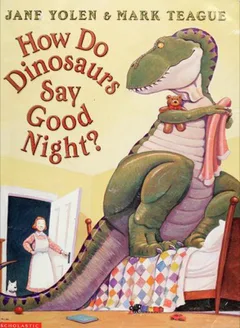 How Do Dinosaurs Say Good Night?Ages 2–5 · 3.5 min · 152 wordsFull book page
- Estimated read-aloud time
- about 3.5 minutes
- Words
- 152
- Sentences per spread
- 1
- Re-read tolerance
- 5/5strong repeat appeal
- Vocabulary
- 2/5everyday words
- Ages
- 2–5
Book features rhymes · repeated refrain · join-in questions
Why it worksQuestions about dinosaur bedtime misbehavior lead into affectionate goodnight actions, letting children compare familiar routines with an outsized comic character.
Worth knowingThe earlier questions give plenty of attention to refusal and noisy behavior. Read the kind ending as part of the story rather than turning the book into a test of a child's bedtime manners.
Full book page
Choose naming, touching or a sequence of action
Dinosaur Roar! organizes its dinosaurs through contrasts. That’s Not My Dinosaur makes surface differences part of a repeated tactile search. Dinosaur Dig and Dinosaur Zoom put dinosaur characters into activity and vehicles. These choices offer different things to do with the page: compare a pair, feel a surface or follow what happens next.
The word count does not capture that distinction. A tactile book may hold very little spoken text but invite handling; a vehicle story may have more of its action in the illustrations. Choose the mechanism that matches the session.
Keep fantasy separate from a factual request
How Do Dinosaurs Say Good Night? and How Do Dinosaurs Get Well Soon? make recognizable everyday behavior comic through dinosaur characters. They are not guides to how prehistoric animals lived. If the child is asking which animals existed together, what they ate or how fossils are found, add a researched nonfiction source rather than treating fictional scenes as answers.
Names or labeled endpapers can give a useful starting point for recognizing a dinosaur, but they do not turn every incident in the story into scientific information.
Check what kind of joke you are sharing
A loud, triumphant dinosaur can be enjoyable for an active reading but a different fit from a quiet tactile search. Dinosaur vs. the Potty also makes a particular everyday task part of its comedy. Read its notes before choosing it simply because the child likes dinosaurs. An interest can connect the reader with a topic; it does not make every topic the same book choice.
Compare every cover and read-aloud time
Open any book for its details, review and things worth knowing, right here. Read-aloud times are estimates for an unhurried pace, including time for page-turning and looking at pictures. How Owl and Page estimates read-aloud time.
- Dinosaur Roar!Ages 0–3 · 3 min · about 70 wordsFull book page
- Estimated read-aloud time
- about 3 minutes
- Words
- 70approximate
- Sentences per spread
- 1
- Re-read tolerance
- 4/5good repeat appeal
- Vocabulary
- 1/5plain words
- Ages
- 0–3
Book features rhymes · repeated refrain · join-in questions
Why it worksRhyming dinosaur contrasts connect visible differences in size, shape and temperament with short descriptive language.
Worth knowingOpposites are the main task; the dinosaurs' movement toward lunch is only a light through-line. How Do Dinosaurs Say Good Night? adds a developed family situation and behavioral question.
Full book page- Dinosaur Dig!Ages 2–4 · 3.5 min · 162 wordsFull book page
- Estimated read-aloud time
- about 3.5 minutes
- Words
- 162
- Sentences per spread
- 1
- Re-read tolerance
- 4/5good repeat appeal
- Vocabulary
- 2/5everyday words
- Ages
- 2–4
Book features repeated refrain · join-in questions
Why it worksA growing dinosaur crew operates construction machinery, turning counting into a sequence of jobs that lead to one shared result.
Worth knowingThe dinosaurs are playful workers rather than a source of prehistoric facts. Dinosaur Zoom! uses the same combination of animals and vehicles for a journey instead of a building project.
Full book page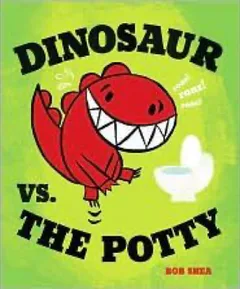 Dinosaur vs. the PottyAges 2–4 · 3.5 min · about 150 wordsFull book page
- Estimated read-aloud time
- about 3.5 minutes
- Words
- 150approximate
- Sentences per spread
- 1
- Re-read tolerance
- 4/5good repeat appeal
- Vocabulary
- 1/5plain words
- Ages
- 2–4
Book features repeated refrain · join-in questions
Why it worksDinosaur declares victory after lemonade, sprinkler play, juice and a pool, even as the repeated drinks make the eventual need increasingly obvious. The victory chant lets a listener join the defiance before the final reversal.
Worth knowingThe comedy depends on prolonged holding and does not model a calm toilet routine. Potty is the quieter alternative for noticing the signal and trying; Dinosaur is for laughing at denial.
Full book page- Dinosaur Zoom!Ages 2–4 · 3.5 min · 160 wordsFull book page
- Estimated read-aloud time
- about 3.5 minutes
- Words
- 160
- Sentences per spread
- 1
- Re-read tolerance
- 4/5good repeat appeal
- Vocabulary
- 2/5everyday words
- Ages
- 2–4
Book features repeated refrain · join-in questions
Why it worksDinosaurs travel by different vehicles toward a hidden destination, making the change from noisy journey to surprise party the story's organizing reveal.
Worth knowingThe destination is a party rather than a vehicle explanation. Dinosaur Dig! offers a clearer sequence of work for a child asking what each machine does.
Full book page- How Do Dinosaurs Say Good Night?Ages 2–5 · 3.5 min · 152 wordsFull book page
- Estimated read-aloud time
- about 3.5 minutes
- Words
- 152
- Sentences per spread
- 1
- Re-read tolerance
- 5/5strong repeat appeal
- Vocabulary
- 2/5everyday words
- Ages
- 2–5
Book features rhymes · repeated refrain · join-in questions
Why it worksQuestions about dinosaur bedtime misbehavior lead into affectionate goodnight actions, letting children compare familiar routines with an outsized comic character.
Worth knowingThe earlier questions give plenty of attention to refusal and noisy behavior. Read the kind ending as part of the story rather than turning the book into a test of a child's bedtime manners.
Full book page- That's Not My Dinosaur...Ages 0–3 · 3.5 min · about 90 wordsFull book page
- Estimated read-aloud time
- about 3.5 minutes
- Words
- 90approximate
- Sentences per spread
- 1
- Re-read tolerance
- 4/5good repeat appeal
- Vocabulary
- 2/5everyday words
- Ages
- 0–3
Book features repeated refrain · join-in questions
Why it worksFive dinosaurs are rejected through a repeated ownership sentence because a different tactile feature feels wrong; the final match completes both the texture sequence and the grammatical pattern. A small mouse provides a parallel visual search.
Worth knowingThis uses the same sentence repeatedly over eight pages. While toddlers might love the repetition, adults often find themselves losing interest much faster than their kids do.
Full book page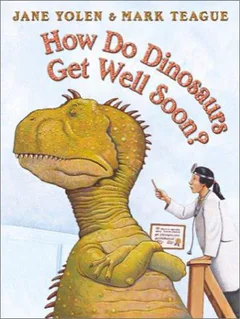 How Do Dinosaurs Get Well Soon?Ages 2–5 · 4 min · 195 wordsFull book page
- Estimated read-aloud time
- about 4 minutes
- Words
- 195
- Sentences per spread
- 1
- Re-read tolerance
- 4/5good repeat appeal
- Vocabulary
- 2/5everyday words
- Ages
- 2–5
Book features rhymes · repeated refrain · join-in questions
Why it worksLarge dinosaurs first exaggerate refusal—throwing tissues, resisting medicine and objecting to rest—before the second half models specific cooperative behaviors.
Full book page