When Do Kids Learn to Read?
There isn't a single age when reading just "happens." Most children begin decoding simple words during their early school years, but everyone develops at their own pace. Because reading is a complex process, a child reading at four and a child reading at seven can both be within the broad range of development. Rather than focusing on a specific starting age, it's more helpful to look at the foundations being built through listening, talking, and play.
- Books on this list
- 12
- Shortest read
- 3 minutesFreight Train
- Longest read
- 22 minutesFrog and Toad Are Friends
- Three minutes or under
- 2 of 12

What "learning to read" actually means
Reading isn't one single skill that arrives all at once, which is why the "when" is such a broad range. It’s actually made up of two different abilities that need to work together, a concept often called the Simple View of Reading. The first is decoding: understanding that the letters on a page represent specific sounds that form a word. The second is language comprehension: knowing what that word actually means and how it fits into the story. This is why you might see a child sound out a word perfectly but have no idea what they just read, or follow a complex story read aloud to them even if they can't read the words themselves yet.
These two parts are built through different experiences. Decoding relies on things like hearing how words break into sounds—why "cat" and "cup" start with the same sound—which is why rhyme and wordplay are so helpful for preschoolers. Comprehension is built through vocabulary and understanding how stories work, which grows through being read to and having lots of conversations. You can think of these different skills as many different strands that eventually twist together over time to create the ability to read, much like the idea of Scarborough's Reading Rope.
Instead of asking exactly when a child starts reading, it’s often more useful to see how those different strands are developing. A four-year-old who isn't reading words yet, but who loves being read to, notices rhymes, and is starting to recognize some letter sounds, is building exactly the kind of foundation they need.
Age by age, and how wide normal really is
The ages below show what is common, but they aren't strict requirements or milestones. The range of development is enormous at every stage. These age bands are broad illustrations, and children develop at different rates.
- Before three
- Reading isn't expected at this age. Instead, children are building the foundations of spoken language and learning that books are something to enjoy. Daily shared reading helps build a rich vocabulary, which supports later reading comprehension.
- Three to four
- It is typical for children to recognize their own name in print or identify a few familiar letters. They may start noticing rhymes and enjoy playing with word sounds. Most aren't reading yet, and if a child isn't showing these signs, they aren't necessarily behind.
- Four to five
- Children begin to connect sounds to letter shapes. Some might start blending very short words or reading simple books, but many children won't start this until later. This is often a time of parental worry because the gap between children varies so much at this age.
- Five to six
- In the US, kindergarten entry and reading instruction vary by state and school, but around five to six, many children receiving instruction begin decoding simple words. At this stage, reading is often slow, effortful, and done aloud; it's about sounding words out rather than instant fluency.
- Six to seven
- For many, this is the year decoding becomes faster and more words are recognized instantly. This is often when struggles can become more visible, and is a common time for schools to offer extra support.
- Seven to eight
- Children from seven to eight often begin reading more smoothly, accurately, and with expression, which frees their attention for meaning. If persistent difficulty remains, or if reading stays slow and effortful, it is worth discussing with the child's teacher.
What actually predicts how reading develops
The age a child starts reading is less important than a few specific skills. The first is phonological awareness: the ability to hear and play with the individual sounds in spoken language. A child who can identify a rhyme or tell you what sound is left when you take the first sound off "sun" is building the oral foundation that formal phonics instruction will later use. It is a purely oral skill that doesn't require any print at all.
The second is letter-sound knowledge. This is knowing the actual sound a letter makes, not just its name. It is a common surprise for parents when they realize that knowing the alphabet song is a different skill than recognizing the sounds letters represent.
The third is vocabulary and oral language. Decoding a word is only useful if the child knows what the word means. This is why the time spent reading aloud to a child—even long before they can read themselves—is so vital. It builds the comprehension skills they will need once they start working through the mechanics of text.
What doesn't necessarily help
Pushing for formal reading earlier doesn't necessarily speed up how quickly a child becomes a fluent reader. While school systems introduce instruction on different schedules, pressure and comparison can create frustration and are poor guides to a child's needs. It's more about supporting the specific way your child learns rather than racing toward a milestone.
Flashcards and reading apps can be fine in small doses, and they can help reinforce specific skills like letter recognition. However, they cannot provide the full mix of interactive shared reading, systematic instruction, and connected-text practice that a child needs. A child can get quite good at a specific app game without those skills automatically transferring to a real page of text.
While watching your child's own progress is a great way to gauge growth, it's important to remember that teacher feedback and the specific instruction they are receiving matter just as much.
When to talk to a professional
While many children's timelines are just part of their individual development, persistent trouble is worth a conversation. If you notice patterns like difficulty with speech sounds, letter-sound links, sounding out words, spelling, word recognition, or reading that remains slow and effortful, it is worth discussing things with a teacher and doctor. They can consider instruction and things like hearing, vision, language, or learning issues.
Family history is a useful piece of the puzzle. Since dyslexia can run in families, having a parent or sibling who struggled is a good reason to be proactive. Getting support early can help, and asking questions is a simple way to stay ahead of any potential hurdles.
Please remember that this isn't a medical diagnosis. These observations are simply meant to help you distinguish between the wide range of development and a pattern that might be worth having a professional look into properly.
Why your location matters
A lot of the conflicting advice online comes down to different school systems. In the United States, kindergarten entry and reading instruction vary by state and school. In England, children generally enter Reception at four or five; schools teach systematic synthetic phonics, and most pupils take the Year 1 phonics screening check by age six.
It is helpful to compare online advice with your local curriculum and the specific instruction your child has received.
Compare every cover and read-aloud time
Open any book for its measurements, parent notes and things worth knowing, right here. Read-aloud times are estimates for an unhurried pace, including time for page-turning and looking at pictures. How Owl and Page estimates read-aloud time.
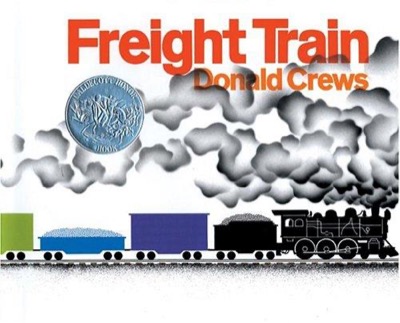 Freight TrainBefore they read: building the foundationsAges 0–4 · 3 min · 60 wordsView full book page
- Estimated read-aloud time
- about 3 minutes
- Words
- 60our estimate, not a published count
- Sentences a page
- 1
- Re-read tolerance
- 4/5survives a fortnight on repeat
- Vocabulary
- 2/5everyday words
- Age range
- 0–4
Book features repeated refrain · join-in questions
Why it worksA colorful journey through a train of cars, each with its own color and name. The sparse text and beautiful, almost wordless spreads allow toddlers to point and identify colors and cars.
Worth knowingThere isn't a story here, just a sequence of trains passing by. If your little one wants a plot rather than a machine, they might find this boring.
View the full book page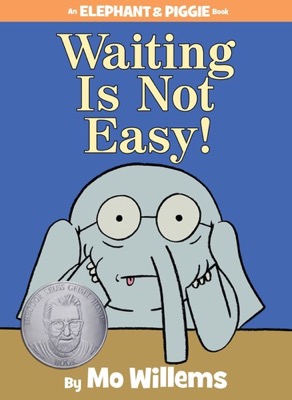 Waiting Is Not Easy!First words: books they can begin to decodeAges 3–6 · 3 min · 197 wordsView full book page
- Estimated read-aloud time
- about 3 minutes
- Words
- 197
- Sentences a page
- 1
- Re-read tolerance
- 5/5still fine on the fortieth reading
- Vocabulary
- 1/5plain words
- Age range
- 3–6
Book features repeated refrain
Why it worksGerald’s "GROAN!" grows larger on every page, allowing even non-readers to participate in the mounting frustration. It’s a funny, relatable look at the struggle of being patient while waiting for something exciting.
View the full book page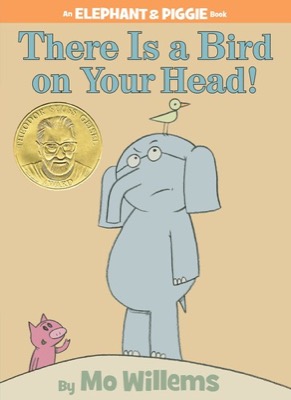 There Is a Bird on Your Head!First words: books they can begin to decodeAges 3–6 · 3.5 min · 242 wordsView full book page
- Estimated read-aloud time
- about 3.5 minutes
- Words
- 242
- Sentences a page
- 1
- Re-read tolerance
- 5/5still fine on the fortieth reading
- Vocabulary
- 1/5plain words
- Age range
- 3–6
Book features repeated refrain
Why it worksWith speech bubbles color-coded for each character, this book turns reading into a mini-performance. The escalating comedy of one bird turning into a whole nest makes it a hit for repeated readings.
View the full book page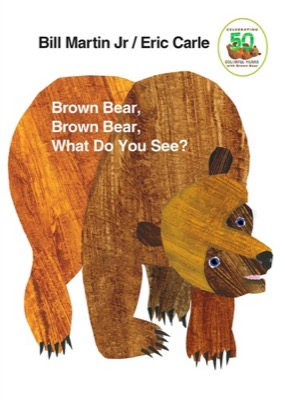 Brown Bear, Brown Bear, What Do You See?Before they read: building the foundationsAges 0–4 · 4 min · 196 wordsView full book page
- Estimated read-aloud time
- about 4 minutes
- Words
- 196
- Sentences a page
- 1
- Re-read tolerance
- 5/5still fine on the fortieth reading
- Vocabulary
- 1/5plain words
- Age range
- 0–4
Book features rhymes · repeated refrain · join-in questions
Why it worksThe same twelve-word frame every spread, with only the animal and colour changing, makes this a perfect first "I can read it myself" book. Because the next animal is shown before it is named, even a barely-verbal toddler can correctly answer the question.
View the full book page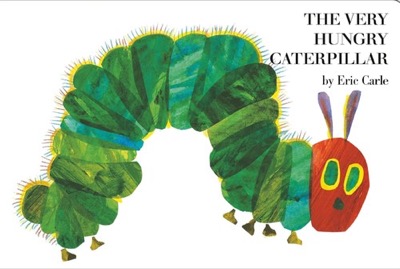 The Very Hungry CaterpillarBefore they read: building the foundationsAges 2–4 · 4 min · 221 wordsView full book page
- Estimated read-aloud time
- about 4 minutes
- Words
- 221
- Sentences a page
- 1
- Re-read tolerance
- 5/5still fine on the fortieth reading
- Vocabulary
- 2/5everyday words
- Age range
- 2–4
Book features repeated refrain · join-in questions
Why it worksWith die-cut holes for little fingers to follow, this is a tactile favorite for toddlers. The "Saturday binge" spread is perfect for practicing counting and naming different foods.
View the full book page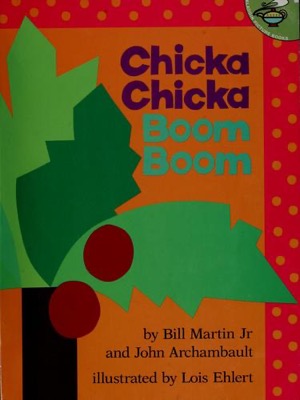 Chicka Chicka Boom BoomBefore they read: building the foundationsAges 2–5 · 5 min · 300 wordsView full book page
- Estimated read-aloud time
- about 5 minutes
- Words
- 300our estimate, not a published count
- Sentences a page
- 2
- Re-read tolerance
- 5/5still fine on the fortieth reading
- Vocabulary
- 2/5everyday words
- Age range
- 2–5
Book features rhymes · repeated refrain · join-in questions
Why it worksA rhythmic, percussive chant that's more about sound than letters at first. It’s a high-energy way to introduce alphabet recognition through a catchy, musical repetition.
Worth knowingFor two-year-olds, the focus is on the catchy sound rather than the sense. The ending, involving letter injuries like bruised toes, may go right over their heads.
View the full book page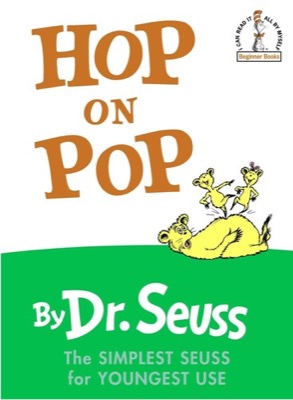 Hop on PopFirst words: books they can begin to decodeAges 3–5 · 5 min · 384 wordsView full book page
- Estimated read-aloud time
- about 5 minutes
- Words
- 384
- Sentences a page
- 1
- Re-read tolerance
- 4/5survives a fortnight on repeat
- Vocabulary
- 1/5plain words
- Age range
- 3–5
Book features rhymes · join-in questions
Why it worksBuilt around rhyming word families like UP PUP and ALL TALL, the large print makes patterns visible. Because each spread is independent, you can easily stop the story whenever you need to.
View the full book page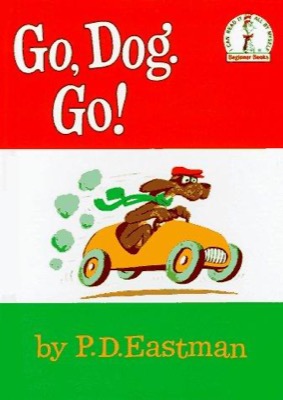 Go, Dog. Go!First words: books they can begin to decodeAges 2–5 · 6.5 min · 515 wordsView full book page
- Estimated read-aloud time
- about 6.5 minutes
- Words
- 515
- Sentences a page
- 1
- Re-read tolerance
- 4/5survives a fortnight on repeat
- Vocabulary
- 1/5plain words
- Age range
- 2–5
Book features repeated refrain · join-in questions
Why it worksPositional and color words are taught through pictures alone—big vs. little, or a dog under a tree. A pre-reader can get every page right, and the "Do you like my hat?" gag leads to a party.
View the full book page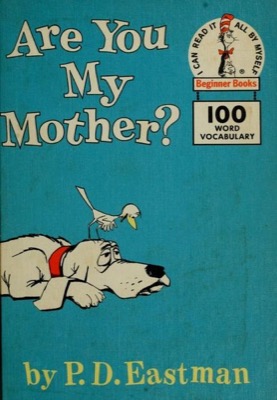 Are You My Mother?Reading to you: developing comprehension through storiesAges 3–5 · 8 min · 699 wordsView full book page
- Estimated read-aloud time
- about 8 minutes
- Words
- 699
- Sentences a page
- 1
- Re-read tolerance
- 4/5survives a fortnight on repeat
- Vocabulary
- 1/5plain words
- Age range
- 3–5
Book features repeated refrain · join-in questions
Why it worksA single question is asked eight times to increasingly unlikely characters, allowing the child to join in and say "no" to a cow, plane, or digger. The simple vocabulary makes it ideal for new readers.
Worth knowingThe baby bird is alone and lost for most of the journey, and the Snort scene can be a little worrying for three-year-olds.
View the full book page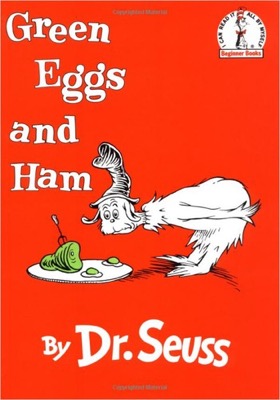 Green Eggs and HamReading to you: developing comprehension through storiesAges 3–6 · 8.5 min · 769 wordsView full book page
- Estimated read-aloud time
- about 8.5 minutes
- Words
- 769
- Sentences a page
- 2
- Re-read tolerance
- 5/5still fine on the fortieth reading
- Vocabulary
- 1/5plain words
- Age range
- 3–6
Book features rhymes · repeated refrain · join-in questions
Why it worksWith only fifty short words, every new location is added to a growing list the child can recite. A five-year-old can often read this one aloud themselves after just a few weeks of practice.
Worth knowingAt over 60 pages, this is a long read for its level. The constant repetition can be quite tiring for the adult reading it.
View the full book page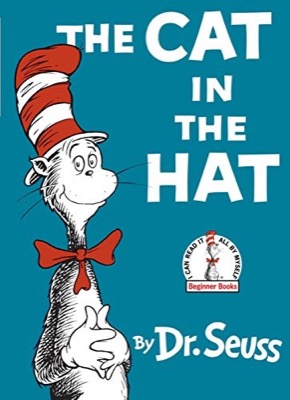 The Cat in the HatReading to you: developing comprehension through storiesAges 4–6 · 16 min · 1,621 wordsView full book page
- Estimated read-aloud time
- about 16 minutes
- Words
- 1,621
- Sentences a page
- 2
- Re-read tolerance
- 4/5survives a fortnight on repeat
- Vocabulary
- 2/5everyday words
- Age range
- 4–6
Book features rhymes
Why it worksBuilt from a specific 236-word list, the rhythm stays within a new reader's decoding skills. The tension of the messy house and the fish's nagging keeps a five-year-old engaged for a full reading.
Worth knowingThis is one of the longer books, running about fifteen minutes. It's enough for a full bedtime on its own and might be too much for a tired four-year-old.
View the full book page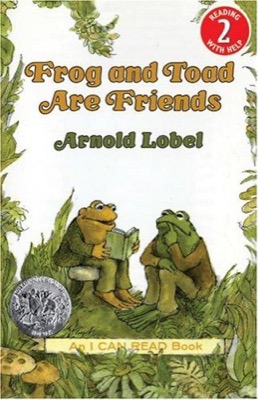 Frog and Toad Are FriendsReading to you: developing comprehension through storiesAges 4–6 · 22 min · 2,281 wordsView full book page
- Estimated read-aloud time
- about 22 minutes
- Words
- 2,281
- Sentences a page
- 3
- Re-read tolerance
- 4/5survives a fortnight on repeat
- Vocabulary
- 2/5everyday words
- Age range
- 4–6
Why it worksFeaturing five short chapters, this acts as a bridge to chapter books. The story where Frog sends Toad a letter by snail is a frequent favorite among children.
Worth knowingThis is the longest book in the set. Compared to the high-energy jokes of Elephant & Piggie, it's quite gentle and may feel a bit flat to some kids. Try one chapter at a time.
View the full book page
Questions parents ask
- What age do most kids learn to read?
- There isn't one specific age when reading suddenly "happens." Many children begin decoding simple words during the early school years, often between five and seven. True fluency—the kind where they aren't constantly sounding out every word—usually develops more slowly over time.
- Should a 5 year old be able to read?
- Not necessarily. At this age, look for foundational skills like sound-letter links, enjoying shared reading, and the ability to retell a story. If you have concerns about progress, try asking the child's teacher.
- Is my 4 year old behind if they cannot read?
- Not reading at four, by itself, does not show that a child is behind. Focus on early foundations and talk to your child's teacher if you have concerns.
- What actually helps a child learn to read?
- A mix of skills is key. Daily shared reading builds the vocabulary and sentence patterns that reading eventually relies on. It also helps to play with rhymes and wordplay; hearing that words can be broken into sounds is the practical side of what formal phonics teaches. Ultimately, reading is a combination of decoding words and understanding the language behind them.
- Is it a problem if my child reads later than their friends?
- The range of development is quite wide at these ages. Rather than comparing your child to others, it's often more useful to look at their own steady progress and talk to their teacher if you feel they aren't making the progress they should.
- Does starting reading earlier make a child a better reader later?
- Different school systems, like those in England or the US, introduce instruction at different times based on local curricula. It is often more helpful to focus on your child's needs and teacher feedback rather than comparing their start date to other systems or children.
- When should I ask a teacher or doctor about it?
- If you notice persistent trouble with things like sounding out words, spelling, or recognizing common words, it is worth a conversation. If reading remains slow and effortful, or if they struggle with speech sounds and letter-sound links, reach out to their teacher or doctor. They can help you determine if they need support for hearing, vision, language, or learning issues. Because dyslexia can run in families, being proactive can be very helpful.
- Should I still read aloud once my child can read themselves?
- Yes. Even after they start reading independently, reading aloud remains incredibly valuable. A child's ability to understand a story (listening comprehension) often moves much faster than their ability to decode the words on the page. Reading together keeps building the vocabulary and complex ideas that their independent reading might not reach just yet.