Read-aloud ideas
How to share a wordless picture book
Begin with the pictures, follow a visible change and share the telling while keeping observation and imagination clear.
Published
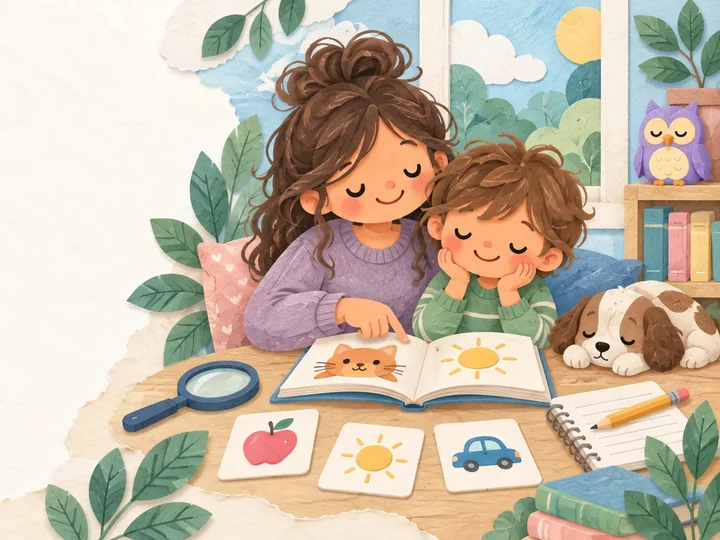
When a picture book has no printed narration, it can be hard to know what to say. Begin by looking together. You can follow a character, notice what changes and leave room for either of you to tell part of the story. There’s no need to supply a sentence for every picture.
BookTrust’s guide to books with few or no words describes sharing the images and talking about what might be happening. The approach below gives you somewhere to begin, including when your child wants to look quietly.
Let the first look be a look
Sit where you can both see the details. Open the book and give the cover and opening pictures some time before you begin explaining. If your child points to an object or turns towards another picture, follow that interest. You can name what they’ve found without asking them to turn it into a whole story.
On a first pass, choose something you can follow: a character who appears again, a distinctive object or a place the story returns to. Turn the pages at a pace that leaves you both time to find it. You don’t have to stop at every detail, and you can go back when something catches your eye.
A wordless book may still have a complicated sequence or small clues. If the pictures are hard to follow from where you’re sitting, bring the book closer or look at fewer spreads. Having no narration to read doesn’t tell you how much looking a particular book will ask for.
Connect one picture with the next
Rather than trying to describe everything on a spread, look for a change. A character may have moved, an object may be in a different place, or the setting may have changed. Keep a finger near the detail, then find what has happened to it in the next picture.
For a hypothetical example, imagine one picture showing a character with a hand on a closed door. The next shows the door open and the character stepping through. You can describe the visible action: the door is open now, and the character is stepping through. That gives you a short piece of story to follow.
The same pictures don’t necessarily tell you why the character went through. Perhaps they were curious, expected a visitor or heard a noise. Those are possible explanations you might invent for this example. Keep the difference clear by saying that you’re wondering or imagining, rather than presenting a guess as something the picture has shown.
This distinction helps when you see the story differently. You can agree that the door opened while having different ideas about the character’s reason. Look back at the image for a detail that supports an idea. A later picture may add information, so you don’t have to settle every uncertainty before turning the page.
Offer a comment and leave space
An adult can keep a wordless reading moving with an observation. In the door example, suggested wording might be, “Their hand’s on the door.” Then pause. Your child might point to the handle, name something elsewhere in the picture, add a line of story or simply keep looking.
You can respond to what they offer. If they point, follow the point. If they name an object, locate it together. If they supply an explanation, keep it as their idea and see where the next picture takes it. There’s no need to ask another question after every response.
If you hear nothing, you can make one more visible connection or turn the page when you’re both ready. Quiet looking doesn’t need to be followed by a demand for an answer. Nor does a pause tell you why a child is quiet or what they’ve understood.
When a detail genuinely interests you, an optional invitation such as “Show me where you noticed that” can help you look together. Use it to find the detail, rather than to check whether your child has reached your interpretation. If they see something you missed, return to the picture and follow it.
Try a telling when you want one
After looking through some or all of the book, you may want to tell the story aloud. Start with the pictures you can connect comfortably. One person can begin and the other can continue at the next spread, or a child can point while an adult supplies the words. You can swap arrangements as you go.
Keep the telling close enough to the pictures that you can follow it. If your child describes an action, you can use their wording rather than adding a longer, more elaborate version. If either of you wants to invent dialogue, make that part of your telling. You’re choosing a voice for the character, not quoting words printed in the book.
If you lose the thread, return to the last picture you understood. Find the character or object you were following, then look at what changes in the next image. You may need to reverse a page turn or linger over a small detail. It’s also fine to leave a puzzling passage and keep looking at the rest; you can revisit it later.
A second telling can be different. You might follow another character, notice a detail you passed over, or change an imagined reason for an action. You don’t have to produce a polished retelling at the end. Looking, pointing and sharing a few connected moments can be the reading you choose today.
If you’re looking for a book to try, our profiles of Journey and Flotsam describe their reading demands and things to know before choosing. With a book already beside you, begin at its opening pictures and follow one visible change. At the end, let your child choose a spread to return to, whether you tell it again or just look.