Board Books for Babies
For a first shared book, the useful question is what you can do together on one spread. A bold image, a repeated sound and a familiar routine offer different starting points. This guide covers newborn sessions as well as the later move toward touching, choosing and turning pages.


Start with a voice and a visible image
Black on White gives you a strongly contrasting picture to point to. A rhyming animal book gives you sounds and a rhythm to repeat. These are different resources for a shared session; you do not need to complete a story or ask the baby to identify anything. The American Academy of Pediatrics recommends shared reading beginning at birth. Keep the session responsive to the baby; you can stop without completing the book.
For newborn reading, check whether the page has one image you can comfortably show while holding the baby. A dense search picture and a book full of removable pieces ask for a very different interaction. Choosing the simpler spread is a practical fit for this session, not a promise that one title will improve a developmental measure.
Change the interaction before buying a new shelf
As the baby begins reaching or showing interest in a particular picture, name the object they touch or repeat the sound associated with it. Peek-a-Who? organizes a small reveal; Dear Zoo adds a recurring question and changing animal. A tactile book makes the surface itself part of the experience. Choose the feature you want to use rather than treating all of these as equivalent baby gifts.
Book-sharing can stay brief and unfinished. Offer a choice between two familiar books, revisit a favorite picture or make the animal noise again. The most useful next purchase may be a different mechanism, not a longer story.
Check the edition and condition
Board pages, fabric pages, flaps and touch panels have different constructions. Inspect the edition description and the condition of a used copy, particularly its attached parts. A sturdy page does not mean every accessory is equally sturdy. Keep the book within the supervision and age guidance for its actual edition; the cover artwork alone is not a format specification.
Compare every cover and read-aloud time
Open any book for its details, review and things worth knowing, right here. Read-aloud times are estimates for an unhurried pace, including time for page-turning and looking at pictures. How Owl and Page estimates read-aloud time.
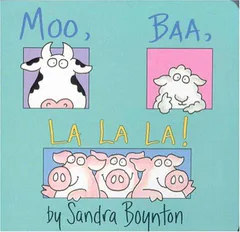 Moo, Baa, La La La!Ages 0–3 · 2 min · about 55 wordsFull book page
- Estimated read-aloud time
- about 2 minutes
- Words
- 55approximate
- Sentences per spread
- 2
- Re-read tolerance
- 5/5strong repeat appeal
- Vocabulary
- 1/5plain words
- Ages
- 0–3
Book features rhymes · join-in questions
Why it worksFamiliar cow and sheep sounds establish the rule before three singing pigs break it, after which the book invites a broader sequence of animal noises. The wrong sound is the joke and the participation cue.
Worth knowingThis supports sound imitation and turn-taking, not factual coverage of farm animals. Its very short pattern offers little narrative for a reader seeking events or character development.
Full book page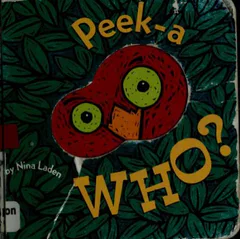 Peek-a Who?Ages 0–3 · 2 min · about 30 wordsFull book page
- Estimated read-aloud time
- about 2 minutes
- Words
- 30approximate
- Sentences per spread
- 1
- Re-read tolerance
- 5/5strong repeat appeal
- Vocabulary
- 1/5plain words
- Ages
- 0–3
Book features rhymes · repeated refrain · join-in questions
Why it worksDie-cut clues, a repeated verbal stem, and immediate page-turn answers create a concise prediction game with a mirror finish.
Worth knowingThe short sequence is quickly memorized and offers little narrative once the guessing game loses novelty.
Full book page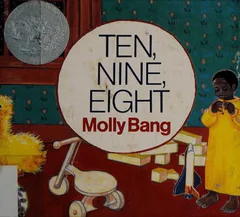 Ten, Nine, EightAges 0–4 · 2.5 min · 69 wordsFull book page
- Estimated read-aloud time
- about 2.5 minutes
- Words
- 69
- Sentences per spread
- 1
- Re-read tolerance
- 4/5good repeat appeal
- Vocabulary
- 1/5plain words
- Ages
- 0–4
Book features rhymes · repeated refrain · join-in questions
Why it worksA father and daughter count backward through toes, buttons, shoes, windows and bedroom objects until one child is tucked in. The decreasing numbers give the routine a visible endpoint and invite searching on every spread.
Worth knowingSome counted objects are decorative rather than steps in a bedtime routine. Goodnight Moon uses repeated farewells for the same slowing purpose; Ten, Nine, Eight gives the listener a numerical path to completion.
Full book page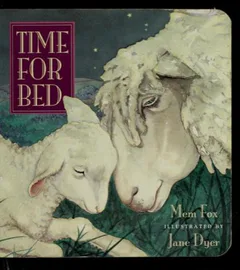 Time for BedAges 0–4 · 2.5 min · about 130 wordsFull book page
- Estimated read-aloud time
- about 2.5 minutes
- Words
- 130approximate
- Sentences per spread
- 1
- Re-read tolerance
- 4/5good repeat appeal
- Vocabulary
- 2/5everyday words
- Ages
- 0–4
Book features rhymes · repeated refrain
Why it worksEach spread pairs an animal parent with a young one in a slow rhyming invitation to settle, then hands the pattern to a human parent and child. The repeating structure makes the final bedtime direction expected rather than abrupt.
Worth knowingThe animal sequence supplies mood more than plot, and the same goodnight pattern may feel long to a child seeking events. Goodnight Moon is even more room-bound; this title offers changing outdoor animals and a clearer parent-child refrain.
Full book page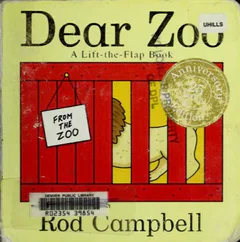 Dear ZooAges 0–4 · 3.5 min · about 110 wordsFull book page
- Estimated read-aloud time
- about 3.5 minutes
- Words
- 110approximate
- Sentences per spread
- 1
- Re-read tolerance
- 5/5strong repeat appeal
- Vocabulary
- 2/5everyday words
- Ages
- 0–4
Book features repeated refrain · join-in questions
Why it worksEach crate flap conceals an animal rejected for one specific trait, so lifting reveals both the noun and the adjective that sends it back. The repeated request-return pattern makes the final acceptable pet easy to anticipate.
Worth knowingThe flaps can tear easily. If your child is under two, you'll want to stick to the board book version.
Full book page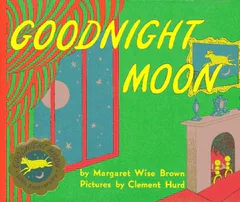 Goodnight MoonAges 0–4 · 3.5 min · 131 wordsFull book page
- Estimated read-aloud time
- about 3.5 minutes
- Words
- 131
- Sentences per spread
- 1
- Re-read tolerance
- 5/5strong repeat appeal
- Vocabulary
- 1/5plain words
- Ages
- 0–4
Book features rhymes · repeated refrain · join-in questions
Why it worksAlternating room views and close-up objects turn a fixed bedroom into a visual inventory, while the light falls and the old lady's whisper gives way to silence. The mouse's changing location provides a small search task inside the repeated goodnights.
Worth knowingThere is no conventional conflict or event sequence, and some named objects are deliberately odd. Time for Bed moves through animal parent-and-child pairs; Goodnight Moon stays in one room and reduces stimulation by repetition.
Full book page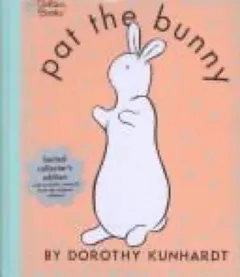 Pat the BunnyAges 0–3 · 3.5 min · about 100 wordsFull book page
- Estimated read-aloud time
- about 3.5 minutes
- Words
- 100approximate
- Sentences per spread
- 1
- Re-read tolerance
- 4/5good repeat appeal
- Vocabulary
- 1/5plain words
- Ages
- 0–3
Book features repeated refrain · join-in questions
Why it worksSeparate page actions ask a baby to pat fur, play peekaboo, smell, look in a mirror and manipulate small objects. The spiral binding and tactile pieces treat the book as an activity sequence rather than a story.
Worth knowingSome materials and family labels reflect an older edition, while delicate inserts can fail under vigorous use. That's Not My Dinosaur offers sturdier repeated textures without the broader sensory assortment.
Full book page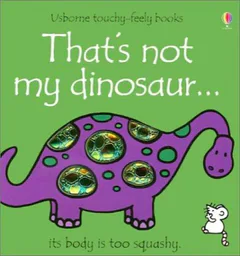 That's Not My Dinosaur...Ages 0–3 · 3.5 min · about 90 wordsFull book page
- Estimated read-aloud time
- about 3.5 minutes
- Words
- 90approximate
- Sentences per spread
- 1
- Re-read tolerance
- 4/5good repeat appeal
- Vocabulary
- 2/5everyday words
- Ages
- 0–3
Book features repeated refrain · join-in questions
Why it worksFive dinosaurs are rejected through a repeated ownership sentence because a different tactile feature feels wrong; the final match completes both the texture sequence and the grammatical pattern. A small mouse provides a parallel visual search.
Worth knowingThis uses the same sentence repeatedly over eight pages. While toddlers might love the repetition, adults often find themselves losing interest much faster than their kids do.
Full book page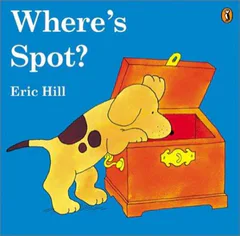 Where's Spot?Ages 0–3 · 3.5 min · about 100 wordsFull book page
- Estimated read-aloud time
- about 3.5 minutes
- Words
- 100approximate
- Sentences per spread
- 1
- Re-read tolerance
- 5/5strong repeat appeal
- Vocabulary
- 1/5plain words
- Ages
- 0–3
Book features repeated refrain · join-in questions
Why it worksSally checks doors, clocks, stairs, cupboards and other hiding places; each flap reveals the wrong animal saying no until a final clue redirects the search. The locations teach spatial language as part of a simple family problem.
Worth knowingThis is quite short and geared toward the under-three crowd. Once a child hits age four, they'll likely have moved past this one quickly.
Full book page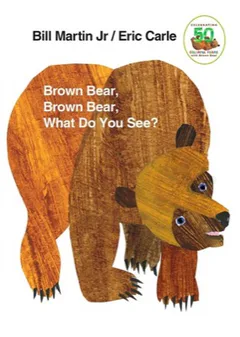 Brown Bear, Brown Bear, What Do You See?Ages 0–4 · 4 min · 196 wordsFull book page
- Estimated read-aloud time
- about 4 minutes
- Words
- 196
- Sentences per spread
- 1
- Re-read tolerance
- 5/5strong repeat appeal
- Vocabulary
- 1/5plain words
- Ages
- 0–4
Book features rhymes · repeated refrain · join-in questions
Why it worksEach animal names the next one in the same question-and-answer frame, so the facing image supplies the answer before the page turns. The final teacher-and-children sequence gathers the entire color-and-animal chain into one recall task.
Worth knowingThe palette includes deliberately fanciful animals, so it is pattern play rather than a realistic color reference. The Very Hungry Caterpillar tracks quantity and change across a week; Brown Bear is better for immediate recitation and visual prediction.
Full book page Black on WhiteAges 0–2 · time varies · 0 wordsFull book page
- Estimated read-aloud time
- time varies
- Words
- 0
- Sentences per spread
- 0
- Re-read tolerance
- 3/5holds up
- Vocabulary
- Not applicableWordless
- Ages
- 0–2
Why it worksSingle high-contrast silhouettes remove visual clutter and leave room for naming, tracing, and sustained looking at form.
Worth knowingThere is no narrative or printed vocabulary, and its deliberately limited palette may have a short window of interest.
Full book page