Board Books for Toddlers
Choose a board edition for how the child will handle it, then choose the story for what you want to share. Thick pages, physical flaps, pretend instructions and a short visual narrative are separate features. This shelf compares those combinations instead of assuming that every book printed on board is equally simple.


Physical activity and pretend activity are different
A flap changes what is physically visible on the page. A tactile panel changes the surface. A printed instruction asks for a response without changing the object. Decide which kind of activity you want before buying: a reader expecting a flap may not be satisfied by an illustration of one, and a small board format can make an originally large interactive layout feel different.
Where’s Spot? uses concealment to organize a search. Dear Zoo uses concealment inside a sequence of unsuitable animals. Where Is Baby’s Belly Button? connects the reveal with naming parts of the body. These are distinct uses of the same construction, so choose the language and interaction as well as the physical format.
A durable edition can contain a demanding story
The Very Hungry Caterpillar has a sequence of days and quantities; Brown Bear uses a recurring question to connect animals and colors; Freight Train is organized around a vehicle and its movement. All can be encountered in sturdy editions, but their reading tasks differ. Board construction is not a reading level.
Use a short, repeatable spread when the child wants to turn pages independently. Use a sequence when you are sitting together and want to connect one event to the next. You can move between those modes without assigning the child a permanent category of ‘ready’ or ‘not ready’.
Inspect what is actually included
Check that the listing describes the board edition you intend, including its dimensions and any special feature. Some editions of familiar books are shortened, resized or redesigned. Match the ISBN or edition details when that matters to your choice, and inspect attached pieces in used copies. The title’s profile explains the story; the seller’s edition information establishes the object you will receive.
Compare every cover and read-aloud time
Open any book for its details, review and things worth knowing, right here. Read-aloud times are estimates for an unhurried pace, including time for page-turning and looking at pictures. How Owl and Page estimates read-aloud time.
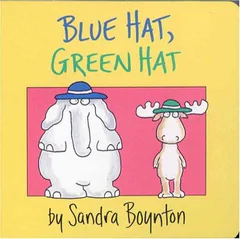 Blue Hat, Green HatAges 0–3 · 2 min · about 45 wordsFull book page
- Estimated read-aloud time
- about 2 minutes
- Words
- 45approximate
- Sentences per spread
- 1
- Re-read tolerance
- 5/5strong repeat appeal
- Vocabulary
- 1/5plain words
- Ages
- 0–3
Book features repeated refrain · join-in questions
Why it worksThree animals model a color-and-clothing combination correctly before the turkey places the item on the wrong body part and triggers “oops.” Each page therefore asks the reader to track two properties and one rule break.
Worth knowingThe turkey is repeatedly positioned as the incompetent joke. Keep correction playful and avoid turning the recurring “oops” role into a label for a child who is learning the same vocabulary.
Full book page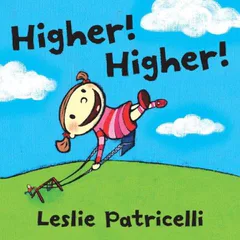 Higher! Higher!Ages 0–3 · 2 min · about 20 wordsFull book page
- Estimated read-aloud time
- about 2 minutes
- Words
- 20approximate
- Sentences per spread
- 1
- Re-read tolerance
- 5/5strong repeat appeal
- Vocabulary
- 1/5plain words
- Ages
- 0–3
Book features repeated refrain · join-in questions
Why it worksThe repeated request and escalating pictures transform an everyday swing ride into a clear visual exploration of height and imagination.
Worth knowingThe sparse text depends on close picture reading and may feel too slight to a listener who wants dialogue or a developed problem.
Full book page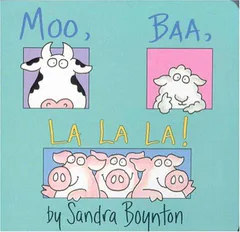 Moo, Baa, La La La!Ages 0–3 · 2 min · about 55 wordsFull book page
- Estimated read-aloud time
- about 2 minutes
- Words
- 55approximate
- Sentences per spread
- 2
- Re-read tolerance
- 5/5strong repeat appeal
- Vocabulary
- 1/5plain words
- Ages
- 0–3
Book features rhymes · join-in questions
Why it worksFamiliar cow and sheep sounds establish the rule before three singing pigs break it, after which the book invites a broader sequence of animal noises. The wrong sound is the joke and the participation cue.
Worth knowingThis supports sound imitation and turn-taking, not factual coverage of farm animals. Its very short pattern offers little narrative for a reader seeking events or character development.
Full book page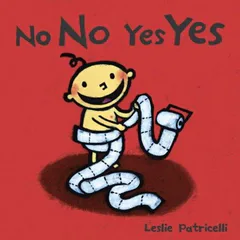 No No Yes YesAges 0–3 · 2 min · about 40 wordsFull book page
- Estimated read-aloud time
- about 2 minutes
- Words
- 40approximate
- Sentences per spread
- 1
- Re-read tolerance
- 5/5strong repeat appeal
- Vocabulary
- 1/5plain words
- Ages
- 0–3
Book features repeated refrain · join-in questions
Why it worksPaired pictures make cause and alternative visible, creating a concrete prompt for talking about everyday choices.
Worth knowingThe no/yes split simplifies situations that may need context and works poorly if read as a list of commands.
Full book page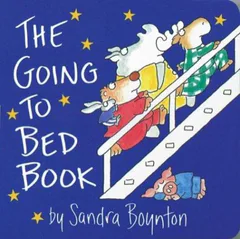 The Going-to-Bed BookAges 0–4 · 2 min · about 110 wordsFull book page
- Estimated read-aloud time
- about 2 minutes
- Words
- 110approximate
- Sentences per spread
- 1
- Re-read tolerance
- 5/5strong repeat appeal
- Vocabulary
- 1/5plain words
- Ages
- 0–4
Book features rhymes
Why it worksThe animal passengers bathe, dress, brush, exercise and finally climb into bunks while their boat rocks beneath the moon. The absurd exercise stop interrupts a recognizable routine without preventing the ending from settling.
Worth knowingThe order is intentionally silly—exercise follows toothbrushing and pajamas—so it should not be used as a literal bedtime checklist. Goodnight Moon offers a quieter fixed-room ritual; this book adds movement and group comedy.
Full book page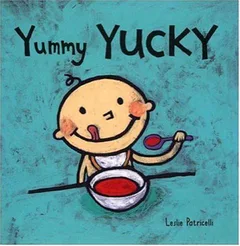 Yummy YuckyAges 0–3 · 2 min · about 40 wordsFull book page
- Estimated read-aloud time
- about 2 minutes
- Words
- 40approximate
- Sentences per spread
- 1
- Re-read tolerance
- 5/5strong repeat appeal
- Vocabulary
- 1/5plain words
- Ages
- 0–3
Book features repeated refrain · join-in questions
Why it worksComic visual pairs turn two opposite words into a practical sorting game about food and nonfood items.
Worth knowingThe binary label can encourage blanket judgments about disliked foods, so adults may want to separate preference from safety.
Full book page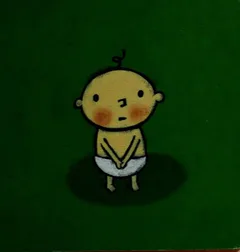 PottyAges 2–3 · 2.5 min · about 100 wordsFull book page
- Estimated read-aloud time
- about 2.5 minutes
- Words
- 100approximate
- Sentences per spread
- 1
- Re-read tolerance
- 4/5good repeat appeal
- Vocabulary
- 1/5plain words
- Ages
- 2–3
Book features repeated refrain · join-in questions
Why it worksBaby notices the bodily signal, considers a diaper and the potty, waits, has a false start and finally succeeds. Very short labels keep attention on the physical sequence and Baby's own decision.
Worth knowingThe minimal text does not teach wiping, flushing or handwashing. Time to Pee! supplies a fuller procedural checklist; Potty is better for naming readiness, waiting and the first success.
Full book page Freight TrainAges 0–4 · 3 min · about 60 wordsFull book page
- Estimated read-aloud time
- about 3 minutes
- Words
- 60approximate
- Sentences per spread
- 1
- Re-read tolerance
- 4/5good repeat appeal
- Vocabulary
- 2/5everyday words
- Ages
- 0–4
Book features repeated refrain · join-in questions
Why it worksA brightly colored train changes as it travels through tunnels, cities and trestles, letting a child follow the same object through shifting surroundings.
Worth knowingThe interest is visual motion and naming rather than a character problem. The Little Engine That Could offers a longer train story with a goal, refusals and a climb.
Full book page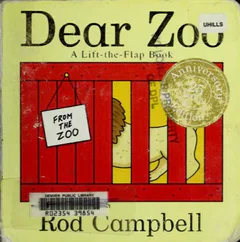 Dear ZooAges 0–4 · 3.5 min · about 110 wordsFull book page
- Estimated read-aloud time
- about 3.5 minutes
- Words
- 110approximate
- Sentences per spread
- 1
- Re-read tolerance
- 5/5strong repeat appeal
- Vocabulary
- 2/5everyday words
- Ages
- 0–4
Book features repeated refrain · join-in questions
Why it worksEach crate flap conceals an animal rejected for one specific trait, so lifting reveals both the noun and the adjective that sends it back. The repeated request-return pattern makes the final acceptable pet easy to anticipate.
Worth knowingThe flaps can tear easily. If your child is under two, you'll want to stick to the board book version.
Full book page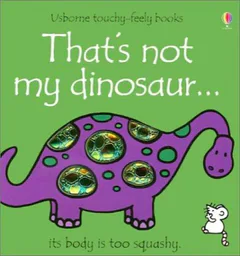 That's Not My Dinosaur...Ages 0–3 · 3.5 min · about 90 wordsFull book page
- Estimated read-aloud time
- about 3.5 minutes
- Words
- 90approximate
- Sentences per spread
- 1
- Re-read tolerance
- 4/5good repeat appeal
- Vocabulary
- 2/5everyday words
- Ages
- 0–3
Book features repeated refrain · join-in questions
Why it worksFive dinosaurs are rejected through a repeated ownership sentence because a different tactile feature feels wrong; the final match completes both the texture sequence and the grammatical pattern. A small mouse provides a parallel visual search.
Worth knowingThis uses the same sentence repeatedly over eight pages. While toddlers might love the repetition, adults often find themselves losing interest much faster than their kids do.
Full book page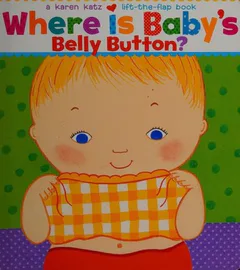 Where Is Baby's Belly Button?Ages 0–3 · 3.5 min · about 60 wordsFull book page
- Estimated read-aloud time
- about 3.5 minutes
- Words
- 60approximate
- Sentences per spread
- 1
- Re-read tolerance
- 5/5strong repeat appeal
- Vocabulary
- 1/5plain words
- Ages
- 0–3
Book features repeated refrain · join-in questions
Why it worksLarge flaps convert basic body-part questions into a repeatable prediction, reveal, and point-to-yourself routine.
Worth knowingThe book depends on intact moving flaps and offers only a brief naming game once the answers are memorized.
Full book page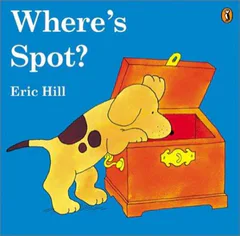 Where's Spot?Ages 0–3 · 3.5 min · about 100 wordsFull book page
- Estimated read-aloud time
- about 3.5 minutes
- Words
- 100approximate
- Sentences per spread
- 1
- Re-read tolerance
- 5/5strong repeat appeal
- Vocabulary
- 1/5plain words
- Ages
- 0–3
Book features repeated refrain · join-in questions
Why it worksSally checks doors, clocks, stairs, cupboards and other hiding places; each flap reveals the wrong animal saying no until a final clue redirects the search. The locations teach spatial language as part of a simple family problem.
Worth knowingThis is quite short and geared toward the under-three crowd. Once a child hits age four, they'll likely have moved past this one quickly.
Full book page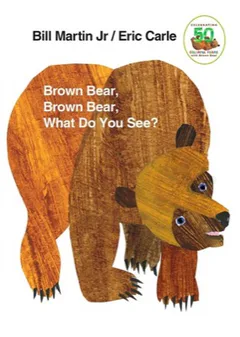 Brown Bear, Brown Bear, What Do You See?Ages 0–4 · 4 min · 196 wordsFull book page
- Estimated read-aloud time
- about 4 minutes
- Words
- 196
- Sentences per spread
- 1
- Re-read tolerance
- 5/5strong repeat appeal
- Vocabulary
- 1/5plain words
- Ages
- 0–4
Book features rhymes · repeated refrain · join-in questions
Why it worksEach animal names the next one in the same question-and-answer frame, so the facing image supplies the answer before the page turns. The final teacher-and-children sequence gathers the entire color-and-animal chain into one recall task.
Worth knowingThe palette includes deliberately fanciful animals, so it is pattern play rather than a realistic color reference. The Very Hungry Caterpillar tracks quantity and change across a week; Brown Bear is better for immediate recitation and visual prediction.
Full book page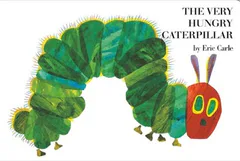 The Very Hungry CaterpillarAges 2–4 · 4 min · 221 wordsFull book page
- Estimated read-aloud time
- about 4 minutes
- Words
- 221
- Sentences per spread
- 1
- Re-read tolerance
- 5/5strong repeat appeal
- Vocabulary
- 2/5everyday words
- Ages
- 2–4
Book features repeated refrain · join-in questions
Why it worksFive weekday spreads add one fruit at a time and one new hole to count; Saturday breaks that measured pattern with ten named foods before Sunday returns to one leaf. The holes, page sizes, days and quantities all carry information rather than serving as decoration.
Worth knowingThe food sequence is a stylized route to metamorphosis, not a factual account of caterpillar feeding or a complete life-cycle explanation. Brown Bear, Brown Bear, What Do You See? is the closer choice when the main task is repeating a fixed spoken pattern rather than tracking change across a week.
Full book page